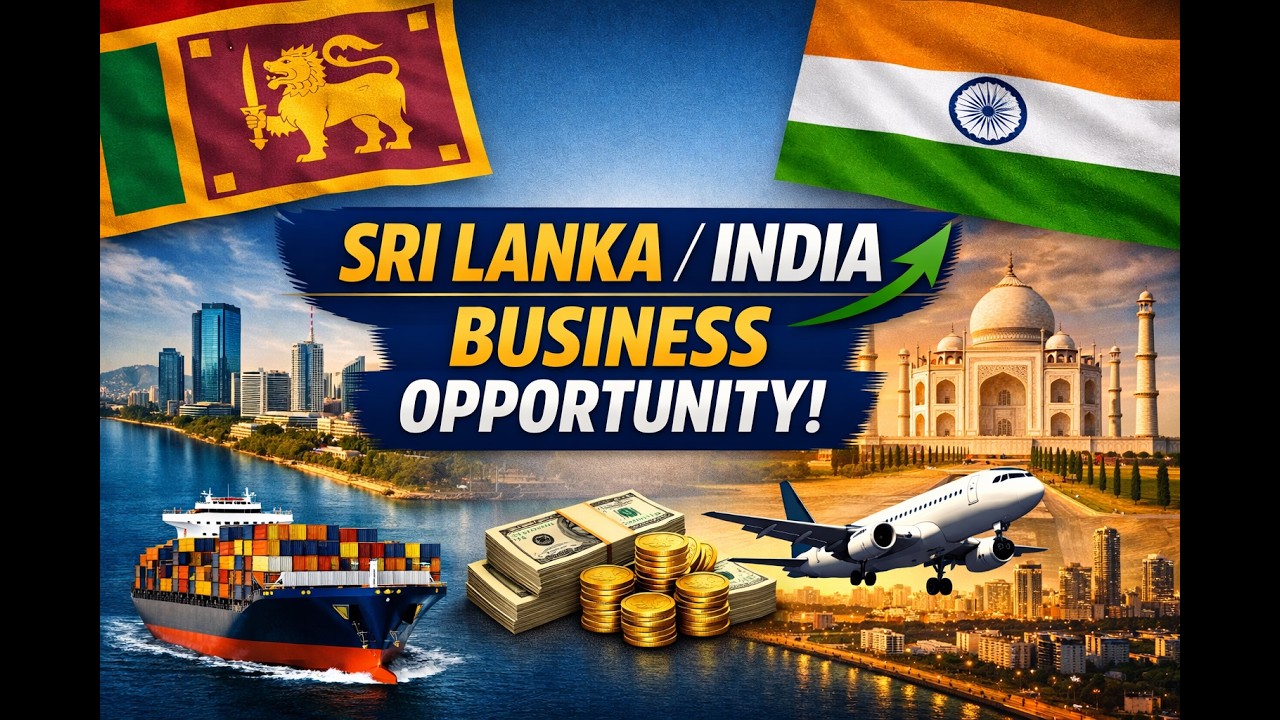
India–Sri Lanka commercial relations are moving beyond traditional merchandise trade toward integrated cooperation in energy, logistics, digital services, tourism, healthcare, manufacturing and infrastructure. For Indian businesses, Sri Lanka offers a nearby market, a gateway to the Indian Ocean and opportunities for joint ventures and regional supply chains.
1. Current Business Sectors
Sector Current business activity and opportunity
Energy and petroleum India supplies petroleum products and is investing in petroleum retail and energy infrastructure. Trincomalee is being developed as an energy hub, with cooperation involving India, Sri Lanka and the UAE.
Pharmaceuticals and healthcare Sri Lanka is a significant market for Indian generic medicines, medical supplies, hospital services, diagnostics and healthcare training. Cooperation includes recognition of the Indian Pharmacopoeia and development of affordable medicines.
Automobiles and engineering Indian vehicles, auto components, machinery, electrical equipment and industrial products have strong demand. Sri Lankan opportunities include vehicle distribution, servicing, component supply and manufacturing partnerships.
Food, agriculture and fisheries Bilateral trade includes sugar, vegetables, animal feed, fruits, nuts, spices, tea, processed foods and fisheries products. Food processing, cold-chain systems and agricultural technology have potential for expansion.
Textiles and apparel India supplies cotton, knitted fabrics and other textile inputs, while Sri Lanka has a competitive apparel-export industry. Opportunities exist in fabric sourcing, sustainable textiles, technical textiles and contract manufacturing.
Tourism and hospitality India is Sri Lanka’s largest tourist source market, with approximately 531,511 Indian arrivals in 2025 and 250,260 arrivals during January–May 2026. Hotels, travel services, religious tourism, wellness tourism and cruise/ferry-linked tourism remain important areas.
Ports, shipping and logistics Colombo, Trincomalee and Kankesanthurai are central to future maritime cooperation. Port services, warehousing, freight forwarding, transshipment, ship repair, cold storage and multimodal logistics are promising areas.
Digital services and finance UPI QR payments are already operational in Sri Lanka. Indian companies can explore fintech, software services, e-governance, cybersecurity, AI, telecom, cloud services and digital payment solutions.
Construction and infrastructure Indian companies are involved in railways, water supply, housing, roads, bridges, port development and renewable-energy projects. EPC contracts, engineering consultancy and project-finance opportunities are likely to continue.
India–Sri Lanka merchandise trade was reported at approximately US$7.1 billion in FY 2025–26, while Indian investment in Sri Lanka exceeds approximately US$2.8 billion. Indian investment is concentrated in petroleum retail, tourism, manufacturing, real estate, telecommunications, banking and financial services.
2. Future Focus Sectors
Renewable energy and electricity trade
This is likely to become the most strategic sector. Planned cooperation includes:
Solar and offshore-wind projects.
The 120 MW Sampur solar project.
Electricity-grid interconnection for two-way power trade.
Green hydrogen and green ammonia.
Solar rooftop systems and energy-efficiency solutions.
LNG and petroleum infrastructure.
The bilateral economic vision specifically identifies renewable energy, power-grid connectivity, green fuels, Trincomalee energy development and a possible petroleum pipeline as long-term priorities.
Maritime connectivity and logistics
Future cooperation is expected to strengthen:
Colombo, Trincomalee and Kankesanthurai ports.
Passenger ferry services between southern India and northern Sri Lanka.
Regional shipping and transshipment.
Warehousing, cold chains and logistics parks.
Shipbuilding, ship repair and marine engineering.
Potential land or bridge connectivity, subject to feasibility and policy decisions.
The acquisition of a controlling stake in Colombo Dockyard by Mazagon Dock Shipbuilders in 2026 also indicates increasing Indian interest in Sri Lanka’s maritime and ship-repair capabilities.
Digital economy and technology
India’s digital public infrastructure can support Sri Lanka in:
Digital identity and citizen services.
Digital payments and fintech.
Government technology platforms.
AI, cloud computing and cybersecurity.
Startup incubation and SME digitisation.
Telecom, 5G/6G research and software exports.
A technology cooperation framework was signed for sharing India’s population-scale digital solutions. Cooperation between NASSCOM, SLASSCOM, IIT Madras and Sri Lankan universities is also expanding, creating opportunities for Indian IT firms and technology startups.
Healthcare, education and skills
Future projects may include:
Generic medicines and pharmaceutical raw materials.
Medical devices and diagnostic equipment.
Telemedicine and digital health.
Hospital management and healthcare training.
Nursing and paramedical education.
Skill-development centres and higher-education campuses.
Collaboration in agriculture, IT, marine sciences and engineering.
The 2025 health and medicine agreements provide a platform for cooperation in medical education, research, digital health and affordable medicines.
Manufacturing and regional supply chains
Sri Lanka can function as a complementary manufacturing and distribution base for Indian companies. Promising segments include:
Food and beverage processing.
Rubber products and tyres.
Apparel and technical textiles.
Automobile components.
Electrical and electronic goods.
Chemicals, plastics and packaging.
Construction materials.
Marine and defence-related manufacturing, subject to approvals.
The India–Sri Lanka Economic Partnership Vision encourages Indian investment in Sri Lankan manufacturing and economic zones.
3. Product Opportunities for Indian SMEs
Particularly relevant opportunities for Indian exporters include:
Pharmaceuticals, surgical products and medical equipment.
Solar panels, inverters, batteries and energy-saving equipment.
Pumps, motors, electrical goods and water-treatment systems.
Auto parts, commercial vehicles and workshop equipment.
Rice, sugar, vegetables, processed foods and animal feed.
Cotton, yarn, fabrics, garments and textile machinery.
Construction materials, sanitaryware and engineering products.
IT services, accounting services, ERP systems and digital marketing.
Packaging machinery, cold-storage equipment and food-processing machinery.
The latest product profile shows strong Indian exports to Sri Lanka in petroleum products, vehicles and parts, machinery, cotton, pharmaceuticals, knitted fabrics, sugar, vegetables and electrical equipment. Sri Lankan exports to India include ships and boats, animal feed, fruits and nuts, spices, aircraft parts, apparel, edible oils and milling products.
4. Market-Entry Priorities
Indian exporters and investors should consider the following approach:
Use the ISFTA carefully: Check product-specific rules of origin, tariff preferences, quotas, negative lists and customs documentation before quoting prices. More than 60% of Sri Lankan exports to India have used ISFTA benefits, whereas only around 5% of Indian exports to Sri Lanka have used the provisions, indicating scope for better utilisation by Indian exporters.
Target distributors and joint ventures: Sri Lankan importers, dealers and project contractors are useful partners for pharmaceuticals, machinery, food products, auto parts and construction products.
Build a southern-India supply chain: Tamil Nadu exporters can leverage proximity through Chennai, Tuticorin/V.O. Chidambaranar and Nagapattinam connections, subject to available shipping and ferry services.
Prioritise after-sales service: Machinery, engineering goods, medical equipment and auto parts require local service, spare-parts and technical-support arrangements.
Monitor payment mechanisms: INR settlement, UPI-based payments and improved banking connectivity may reduce transaction friction, but exporters should confirm bank procedures, exchange-control rules and settlement eligibility.
Track ETCA and trade-policy developments: Negotiations to broaden the existing ISFTA into an Economic and Technology Cooperation Agreement have been held, with 14 rounds reported up to July 2024. Future changes could affect services, investment, trade facilitation and technology cooperation.
5. Practical Conclusion
The strongest near-term opportunities are pharmaceuticals, food products, textiles, auto components, machinery, solar equipment, tourism and logistics. The strongest future opportunities are renewable energy, electricity connectivity, Trincomalee energy projects, digital public infrastructure, healthcare, ports, ship repair, higher education and regional manufacturing.
For Indian MSMEs, Sri Lanka should be approached not only as an export destination but also as a partner market for distribution, tourism, services, project contracting and joint manufacturing. Companies that combine competitive pricing with local partnerships, FTA compliance, reliable payment terms and after-sales support are likely to achieve better results.
Simply Exim thru Sow Exim
91 9944430392
ceo@sowexim.com
www.sowexim.com
Copyright © IndieMa 2026 | Infopluto Media Works Pvt Ltd — All Rights Reserved